


Media Center
Current News
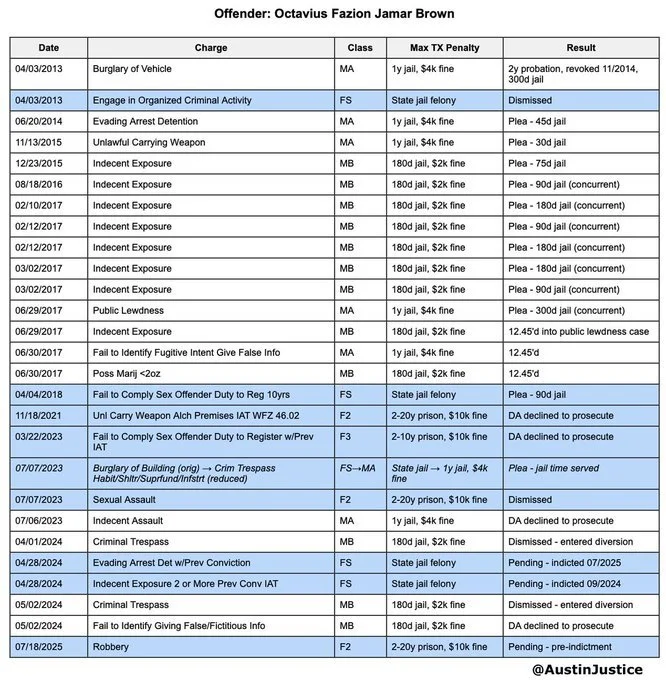
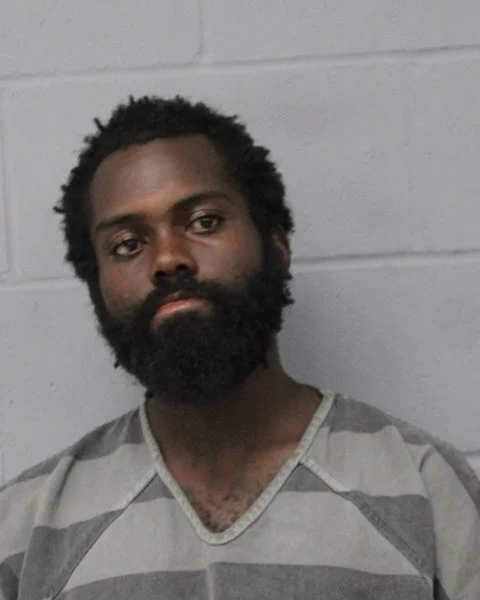
On June 10, 2026, a 30-year-old Austin man named Octavius Brown was arrested after investigators say he broke into three West Campus residences near the The University of Texas at Austin that morning, allegedly committing a series of sexually motivated offenses over roughly three hours. Brown has been charged with three counts of first-degree felony burglary of a habitation with intent to commit another felony.
Brown has a history of other misdemeanors:
- Approximately 30 criminal cases dating back to 2013, multiple prior convictions for indecent exposure, is required to register as a sex offender, has previous charges involving failure to register, burglary, and other offenses, has several felony charges filed since 2021 were later dismissed or rejected.
- In 2026, he received five years of deferred adjudication community supervision after pleading guilty to a 2024 felony indecent exposure case that also occurred in West Campus. He had been released from jail only a few months before these new allegations.
Brown appeared in the Travis County Courthouse on July 23, 2026 to face his allegations. He recieved the following: three second unindicted designation hearings for all three felonies, and a DAJ on an indecent exposure charge to declare guilty.
In The News & Legislative Action
-
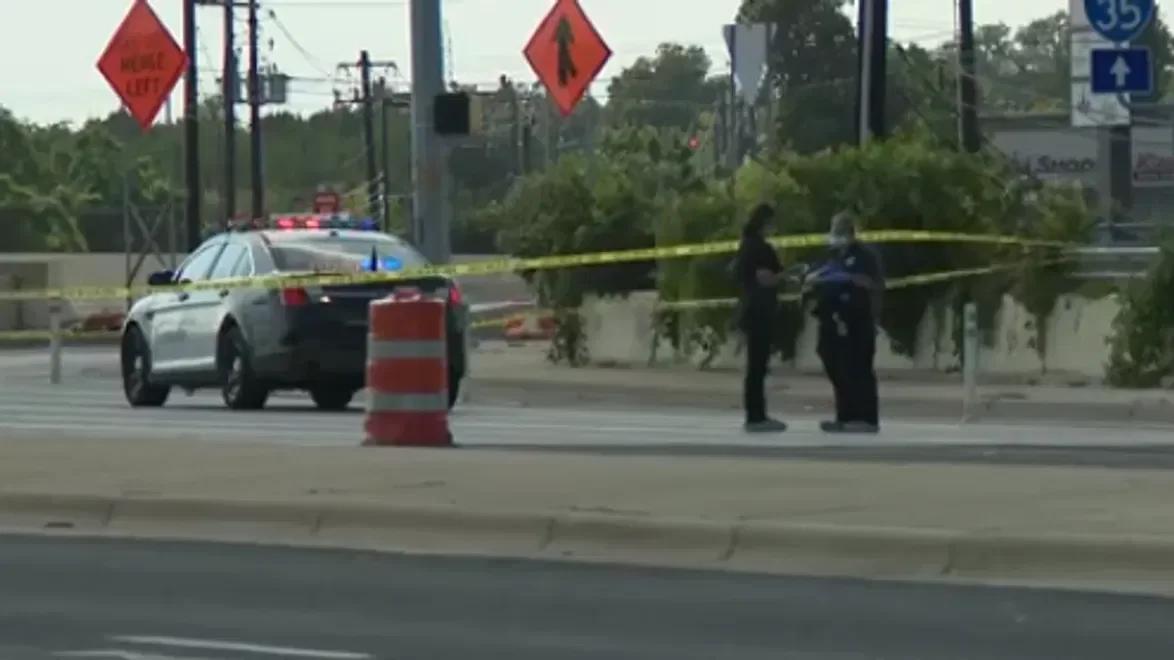
July 28, 2026 - No charges filed 4 days after Austin Homicide
CBS Austin — Stephanie Gonzalez
APD identifies man killed in North Austin shooting; no charges filed - CBS Austin.
This is Austin's 36th homicide of 2026 - an Austin man named Zachary Page was asking for spare change at an intersection and began banging on a vehicle, attempting to break in. The driver then shot Page, on July 24th. As of July 28, no charges had been filed.
Accountability must be pursued, regardless of who was harmed. The Austin DA must protect victims and uphold law and order.
-
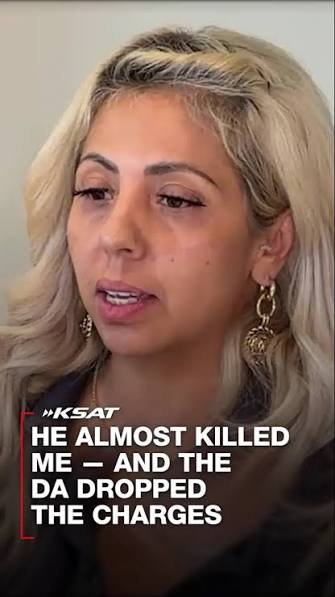
July 28, 2026 - Bexar County woman questions dismissal of felony domestic violence case against ex-boyfriend
Erica Hernandez, Misael Gomez — KSAT
‘The DA failed me’: Bexar County woman questions dismissal of felony domestic violence case against ex-boyfriend. Survivor says she was left searching for answers after prosecutors dropped the charge while securing a 2-year protective order.
Bexar County's DA is one of several DA's across the state of Texas, serving over 2 million residents, yet disenfranchising county citizens in numerous cases such as this.
Due to 'insufficient evidence', a third degree felony charge against a domestic violence offender was dropped, and a 2 year protective order was the only punishment the offender recieved.
The State of Texas cannot continue letting rogue DA's prosecute in this way. We need justice for victims, and accountability for all.
-
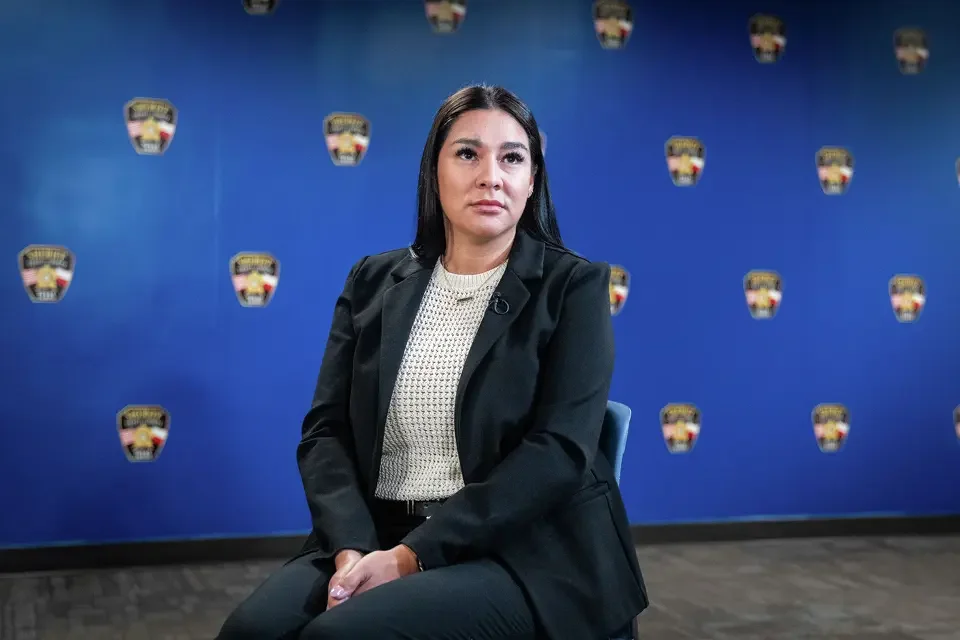
July 10, 2026 - Austin Sheriff's Sergeant nearly shot and offender was let out of jail on bail after 49 days - only to be taken back in 13 days later under 5 felony charges
Austin American Statesman - Tony Plohetski
During a stolen truck encounter, a Texas teen was accused of nearly shooting a sheriffs sergeant, where he faced life in prison for assault of a public servant, a 1st degree felony. The teen then was released on bond after just 49 days in jail.
Thirteen days later, the teen robbed a 16-year-old in Pflugerville at gunpoint. He faced 5 felonies when taken back in to custody, but after reaching a plea agreement with prosecutors, he recieved 5 years of probation and a 90 day in custody behavioral program. Prosecutors dismissed charges of evading arrest and unauthorized use of a motor vehicle.
For the sheriffs sergeant Laura Mabry, this is an unauthorized use of prosecutorial discretion that overreaches beyond the law that dictates criminal punishments and handling of incidents. Criminals like the one that almost shot her cannot be handled lightly and allowed out easily.
-

July 8, 2026 - New Report on 'Rogue' District Attorneys in Texas Calls for Reforms at State Level
Holly Hansen - The Texan
A new analysis from a Texas think tank found a correlation between district attorneys’ non-prosecution policies and increases in crime, but with few state options for addressing so-called “rogue” prosecutors, the group suggests that Texas lawmakers should consider reforms next year.
Travis County District Attorney Jose Garza, who was first elected in 2020, has been accused of dropping or reducing charges in hundreds of criminal cases, including one in which an appeals court had called for a new trial. Last year, Garza’s office reportedly failed to bring timely indictments for crimes that included violent felonies, leading to the dismissals of hundreds of cases.
The Texas Public Policy Foundation’s Right on Crime subsection published a report detailing potential solutions, including reinstating the defunct Prosecuting Attorneys Coordinating Council, as well as authorizing the State Commission on Judicial Conduct to discipline rogue prosecutors.
A further, more probable solution would be to give the Office of the Texas Attorney General authority to prosecute crimes that DA’s dismiss, or creating a state prosecutor to handle cases.
Texas House and Senate committees are expected to hold interim hearings on the issue later this year, but no legislative proposals can be filed until the prefiling period begins on November 9.
-
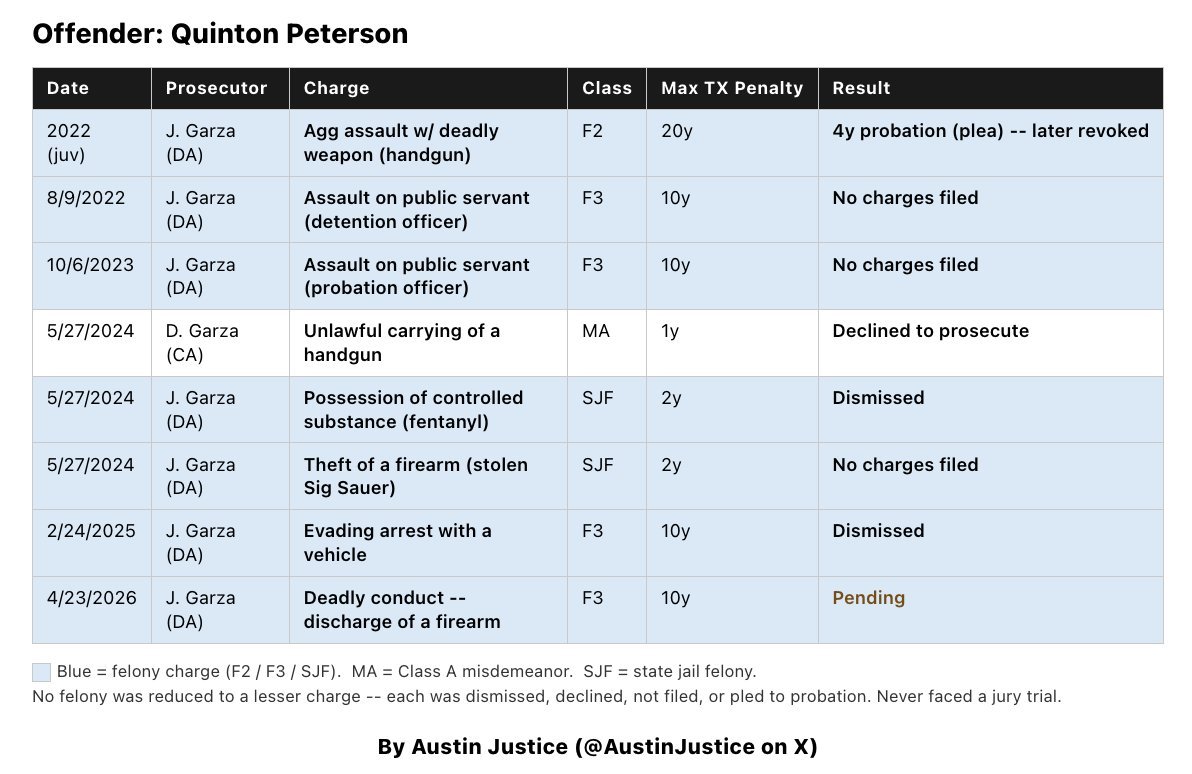
July 5, 2026 - Austin man with charges across illegal drug possession, stolen firearm charge, felony charge for car chase, and more has 7/8 felony cases dismissed or not charged.
Austin Justice - X
Repeated examples of an Austin offender getting let off easy by Jose Garza show the lack of oversight on rogue DA's. Failing to prosecute criminals releases them back onto the streets and invalidates law enforcement's hard work.
In August 2022, Peterson punches a detention officer in the face over and over, then knees him. The officer is left with a bruised, swollen forehead. Prosecutors file no charges. October 2023, he gets mad his therapy points weren't logged. When an officer calls for help, Peterson hits him several times, leaving him bleeding, threatening that his family will come back and shoot him. Prosecutors file no charges. For an aggravated assault with a handgun, Peterson got four years of probation and no prison time.
The rest of his record is as such; A stolen firearm charge, no charges filed. Illegal gun carry, dropped. Drug possession, dismissed. A felony charge for leading police on a car chase, dismissed. He's now out on an ankle monitor for a new charge: firing a gun in April 2026.
We need justice for victims and accountability for all - when public safety and oversight comes last, everyone pays.
-
June 30, 2026 - Austin server stabs pastor at public restaurant, listed for $18K bail for attempted murder
Fox 7 Austin - Donny Wong
An Austin man working as a server at a downtown restaurant was arrested after stabbing a pastor, and has bail set at $18K by Travis County DA Jose Garza.
The server had attended the pastor's church since 2018, and after recognizing him at dinner, had the intent to kill the pastor, stabbing him 4-6 times in the shoulders and back.
A bail for an attempted murder at $18K of a restaurant patron by an employee falls short of true justice, demonstrated again by DA Jose Garza.
Failure to preserve law and order in communities where criminals get an easy serving of consequences paves the way for further harm done to Texas communities.
Safe communities depend on law and order.
-
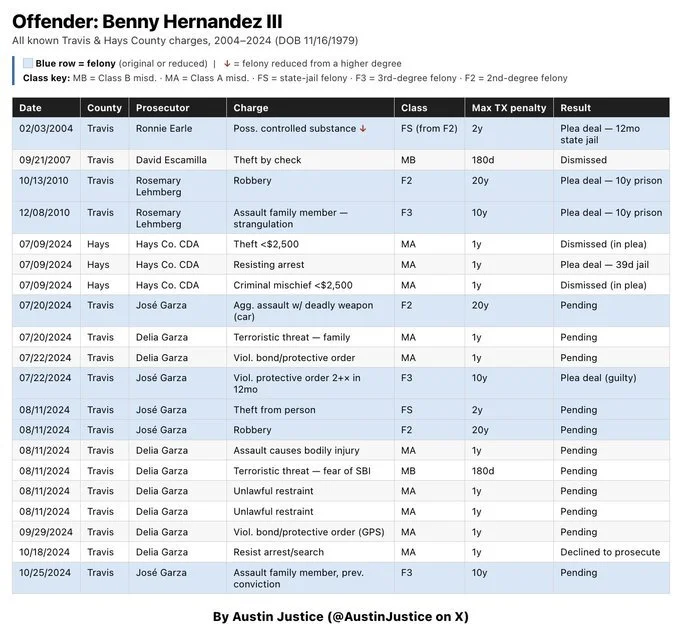
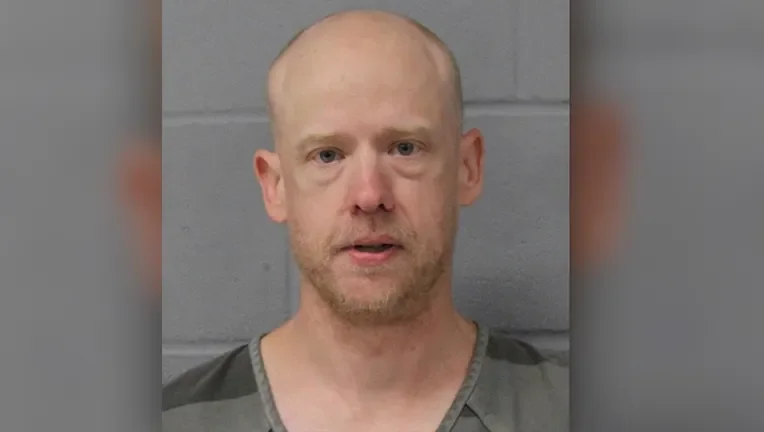
June 29, 2026 - Austin man did 10 years for strangling his ex-girlfriend at the Texas State Capitol, got out, and reinvented himself as a criminal justice reform advocate.
Austin Justice - X
Benjamin Hernandez III strangled his 77-year-old girlfriend and rammed his Volvo into another girlfriend’s car, and acquired 16 new charges in 2024 after being out on bond. From ramming another parked car, chasing bystanders, breaking ankle monitor protocol, choking, punching and threats to his girlfriend, Hernandez was an offender meant to be in prison.
However, lack of oversight and accountability while out on bond created zero regulation and reparations for his actions in the meantime. While obtaining a masters from Texas’ LBJ school, Hernandez indulged in PCP, cocaine, alcohol and marijuana, racking up offenses over the past few years.
As Austin Justice Reports, “a judge lifted the order keeping him away from the woman he choked…his felonies are sliding toward plea deals.”
This let-off-easy mentality prevalent amongst prosecutors and legal officials makes it difficult to preserve law and order in Texas communities to create safe communities for justice. Offenders, violent criminals, and those with proven disturbances warranting monitoring must be kept under the watch of the law.
Justice for victims, accountability for all.
#DPST
-

June 23, 2026 - Teen accused of 2025 Lit Lounge mass shooting faces two new felonies after release on bond
KXAN - Dawson Huey
In DA Garza's Austin, a criminal can shoot 4 people and get released on bond 2 weeks later. An Austin teenager accused of a downtown March 2025 shooting was arrested again after having been released after two weeks for a separate felony arrest.
The teenager was released originally in two weeks after a 1st degree felony charge of aggravated assault mass shooting. In April he was arrested for a second-degree felony of possession of a controlled substance, released for $15,000 on the same day he was booked into jail.
Less than two months later in June, while still wearing an ankle monitor, the teen was an accomplice to an aggravated robbery - facing a $150,000 bond for the robbery, a first-degree felony.
Texas should not put their communities at threat by letting demonstrated offenders go easily. Safe communities depend on law and order.
-
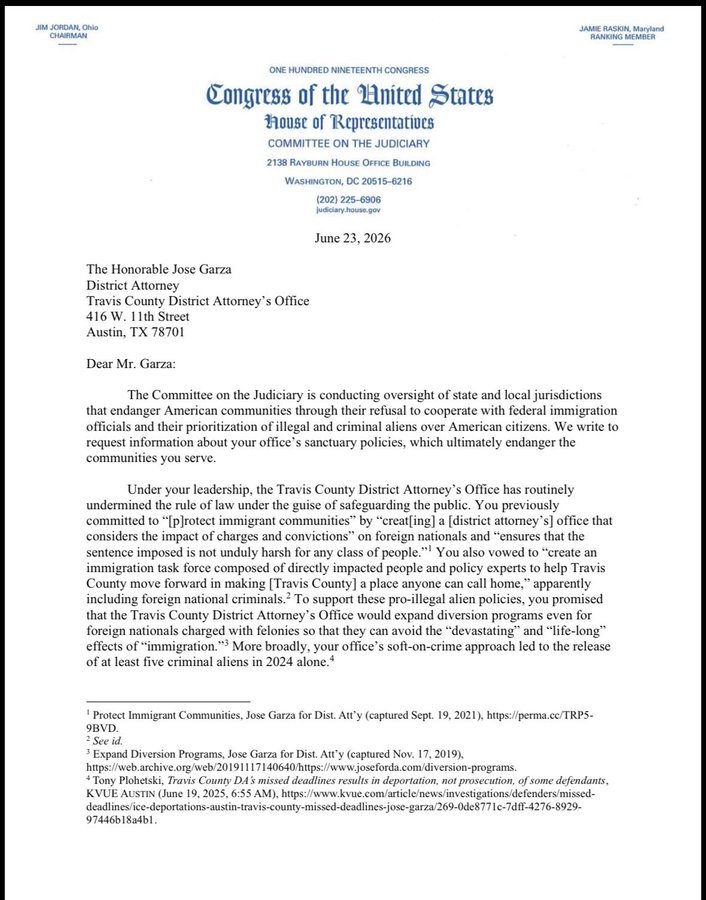
June 24, 2026 - House Judiciary Committee letter signed by Jim Jordan, Chip Roy, and Tom McClintock requests documents from DA Garza on policies related to illegal aliens by July 7.
X - Holly Hansen
Congressman Roy, Jordan and McClintock from US Committee of the Judiciary state DA Garza has "undermined the rule of law" and ensured that sentences "imposed [aren't] unduly harsh for any class of people".
DA Garza’s soft on crime approach led to the release of 5 illegal aliens in 2024. The Committee’s release of this statement is focused on Garza’s handling of immigrants amongst the greater national issue of immigration policies.
The shielding of illegal aliens from criminal enforcement in Travis County undermines public safety and thwarts the enforcement of federal law.
Soft on crime DAs fail to promote safety, integrity and accountability.
-
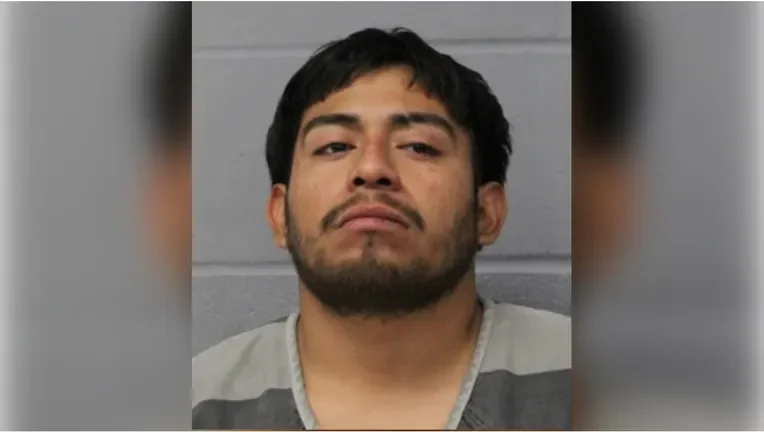
June 16, 2026 - DA dismisses charge against man accused of running over slain Caldwell Co. deputy constable's arm
Fox 7 Austin - Meredith Aldis and Elizabeth Evans
A recent decision by the Travis County District Attorney’s Office has drawn attention after an assault charge connected to a deadly law enforcement incident in Caldwell County was dismissed prior to trial.
The underlying case stems from a January 2026 shooting outside a bar in Austin involving the fatal wounding of Caldwell County Precinct 3 Deputy Constable Aaron Armstrong. During the chaotic aftermath of the shooting, multiple individuals were charged in connection with the incident, including one defendant accused of assault for allegedly running over the deputy constable’s arm as he attempted to leave the scene.
According to court reporting, that assault charge was later dismissed by prosecutors in April due to “insufficient evidence,” following a request from law enforcement. While the capital murder case against another defendant in the same incident remains active, the dismissal has become a focal point in broader discussions about how ancillary charges tied to major violent incidents are evaluated and pursued.
The case highlights the complexity of prosecuting multi-defendant violent incidents, where different levels of involvement can lead to sharply different charging outcomes depending on evidentiary standards and prosecutorial discretion. In practice, it reflects how certain charges may be narrowed or dropped even in cases connected to the death of a peace officer, particularly when evidence is deemed insufficient to meet the burden required for conviction.
More broadly, the decision has been placed within ongoing debates in Texas over prosecutorial thresholds for filing and maintaining charges in violent cases involving multiple actors. Supporters of strict evidentiary standards argue that dismissals of unsupported charges are necessary to preserve the integrity of prosecutions, while critics argue that dropping related charges in high-profile violent cases can contribute to perceptions of inconsistent accountability in the justice system.
The incident continues to be cited in discussions about prosecutorial discretion, case screening decisions, and how justice systems handle the full scope of accountability in complex violent events involving law enforcement victims.
-

June 11, 2026 - Lawsuit over the death of a stabbed individual by an unmonitored offender stalls as courts deemed the suspect "incompetent to stand trial"
KXAN - Brianna Hollis
A fatal, unprovoked stabbing on a CapMetro bus in Austin in May 2025 claimed the life of Akshay Gupta, a 30-year-old entrepreneur and graduate student who had come to the United States to build health technology aimed at improving aging and quality of life, by a offender who evaded criminal accountability.
According to court records and public reporting, the attack occurred near Barton Springs and South Lamar when Gupta, who was seated and not interacting with anyone, was suddenly stabbed in the neck by another passenger. The suspect, Deepak Kandel, was later taken into custody nearby after witnesses called 911. Authorities stated that Kandel later attributed the attack to a delusional belief tied to severe psychosis.
Although Kandel was charged with first-degree murder, the case did not proceed through a traditional criminal trial process. Court records indicate he was found incompetent to stand trial due to profound psychosis and an inability to meaningfully participate in legal proceedings. As a result, prosecution has been effectively paused, with the case shifting into the state competency restoration system rather than moving forward toward adjudication of guilt or innocence.
This outcome has drawn attention to how the justice system handles cases involving severe mental illness, particularly when individuals accused of violent felonies are not ultimately tried in court due to competency determinations. In practice, it creates a prolonged limbo in which formal criminal accountability is delayed indefinitely, even in cases involving fatal violence.
The suspect reportedly had a documented history of serious mental illness, homelessness at the time of the incident, and prior misdemeanor-level criminal involvement dating back several years. Despite this history, he was able to move freely in the community prior to the attack, raising broader questions about the effectiveness of intervention systems intended to identify and manage high-risk individuals.
The incident has become part of a wider public discussion in Austin about transit safety, mental health infrastructure, and the gaps between criminal justice processes and psychiatric care systems when addressing individuals with severe and persistent mental illness.
Gupta’s death has also been viewed through the lens of systemic breakdowns across multiple institutions—mental health services, housing stability systems, and criminal justice procedures—that together failed to prevent a predictable escalation into lethal violence.
-
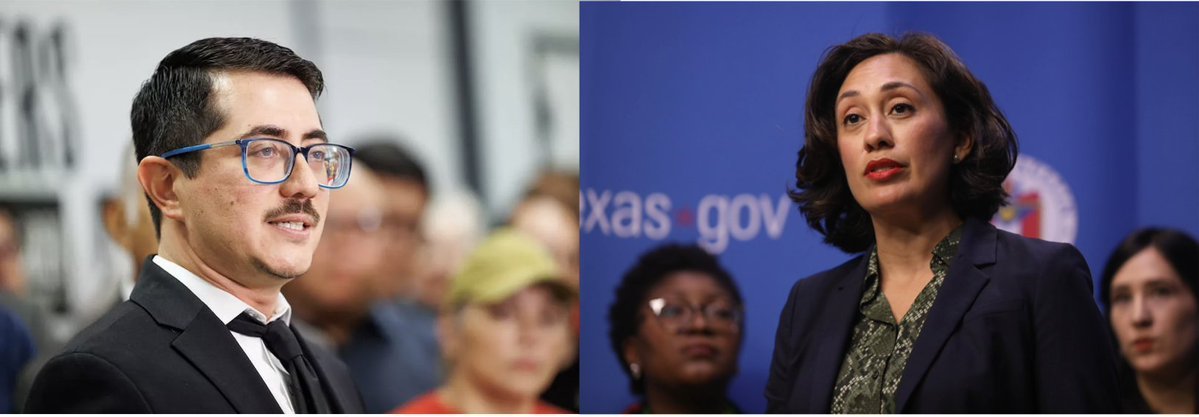
June 11, 2026 - In January 2021, Austin’s top two prosecutors entered office and decided which laws they would stop enforcing. Here is what they promised.
X - Austin Justice
New research finds DA Jose Garza continues to defy prosecutorial integrity and evades Texas law ensuring criminals are handled effectively. On drug sales, Garza seeks to end the prosecution for small sales “unless there is a threat to public safety”. Further, on bail, he states that those charged with a state jail felony get “a presumption of release with no conditions” if Garza decides there is no threat from the situation. Garza further requires that if any lawyer wants a sentence longer than 20 years, they must get approval from leadership, adding hurdles to his own prosecutors.
This doesn’t stop with Garza. A county attorney, not related to Jose, named Delia Garza, has moved her office away from people who are arrested for minor crimes (trespassing and shoplifting) stating they are arrested ‘from their housing and economic status.’ Garza applies unreasonable responses that subvert the law and fail to hold offenders accountable.
As Austin Justice says, “Texas legislators write the criminal laws. They debate them, vote on them, answer to voters for them. The Garzas were elected to enforce those laws. Instead they sorted them into two piles, the ones worth their time and the ones beneath it.”
-
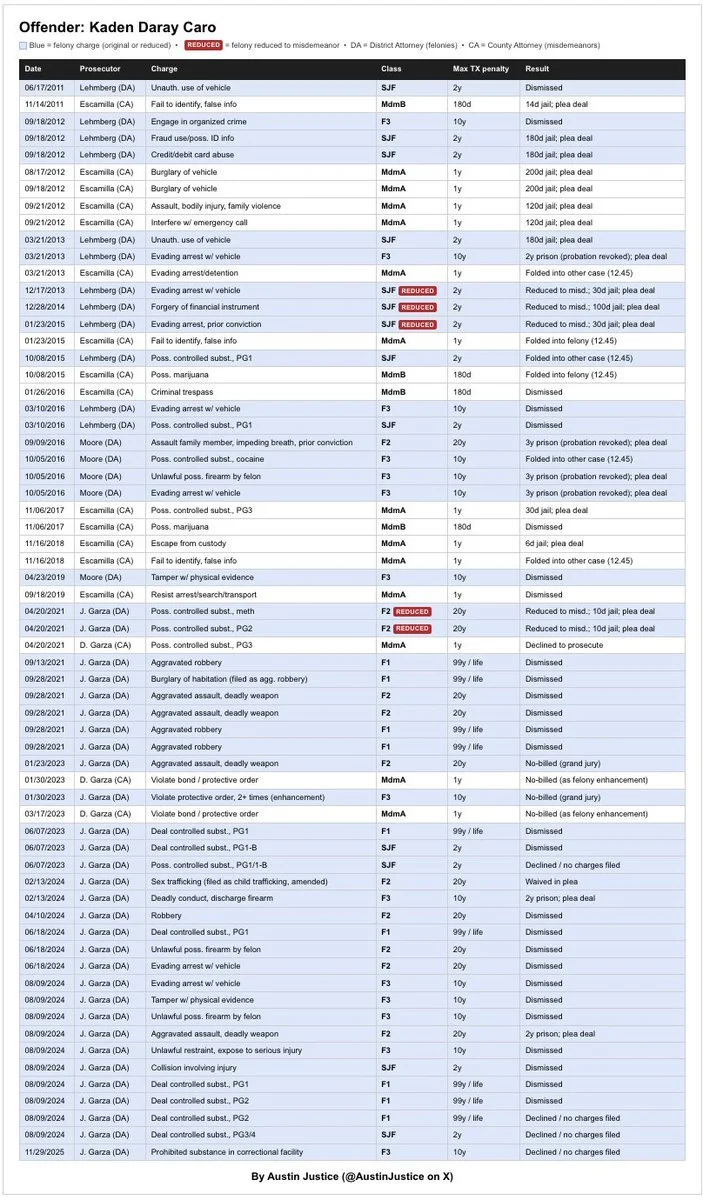
June 8, 2026 - Man charged with sex and drug trafficking walks out with a 2 year deal and 20 felonies dismissed
X - Austin Justice
A violent assault reported at the Austin Public Library in Travis County involved an individual accused of attacking a stranger seated at a public computer, leaving the victim severely injured and unconscious. According to publicly discussed details surrounding the case, the suspect has a documented history of repeated criminal activity, including prior arrests tied to violent behavior, assaultive conduct, and other felony-level charges.
The case has drawn attention because of the suspect’s reported criminal history and prior encounters with the justice system. Over time, multiple charges appear to have resulted in outcomes short of long-term incarceration, including dismissals, plea agreements, or diversion-related resolutions. This pattern has raised concerns about how repeat offenders with violent histories move through the local criminal justice system.
The broader issue highlighted by this case is the challenge of managing repeat violent offenders within existing prosecutorial frameworks. When individuals with extensive criminal records remain in circulation within the community after prior arrests, questions arise about how charging decisions, plea negotiations, and diversion practices are being applied in cases involving escalating levels of violence.
In jurisdictions like Travis County, this has become part of a wider debate over prosecutorial discretion and public safety priorities. Supporters of current reform-oriented approaches argue these tools are necessary for reducing incarceration and addressing root causes of crime, while critics argue that they can contribute to cycles in which repeat offenders are not consistently incapacitated before committing further serious offenses.
The incident illustrates the tension between these approaches: balancing rehabilitation and system capacity on one hand, and the expectation of incapacitation for individuals with repeated violent conduct on the other.
-
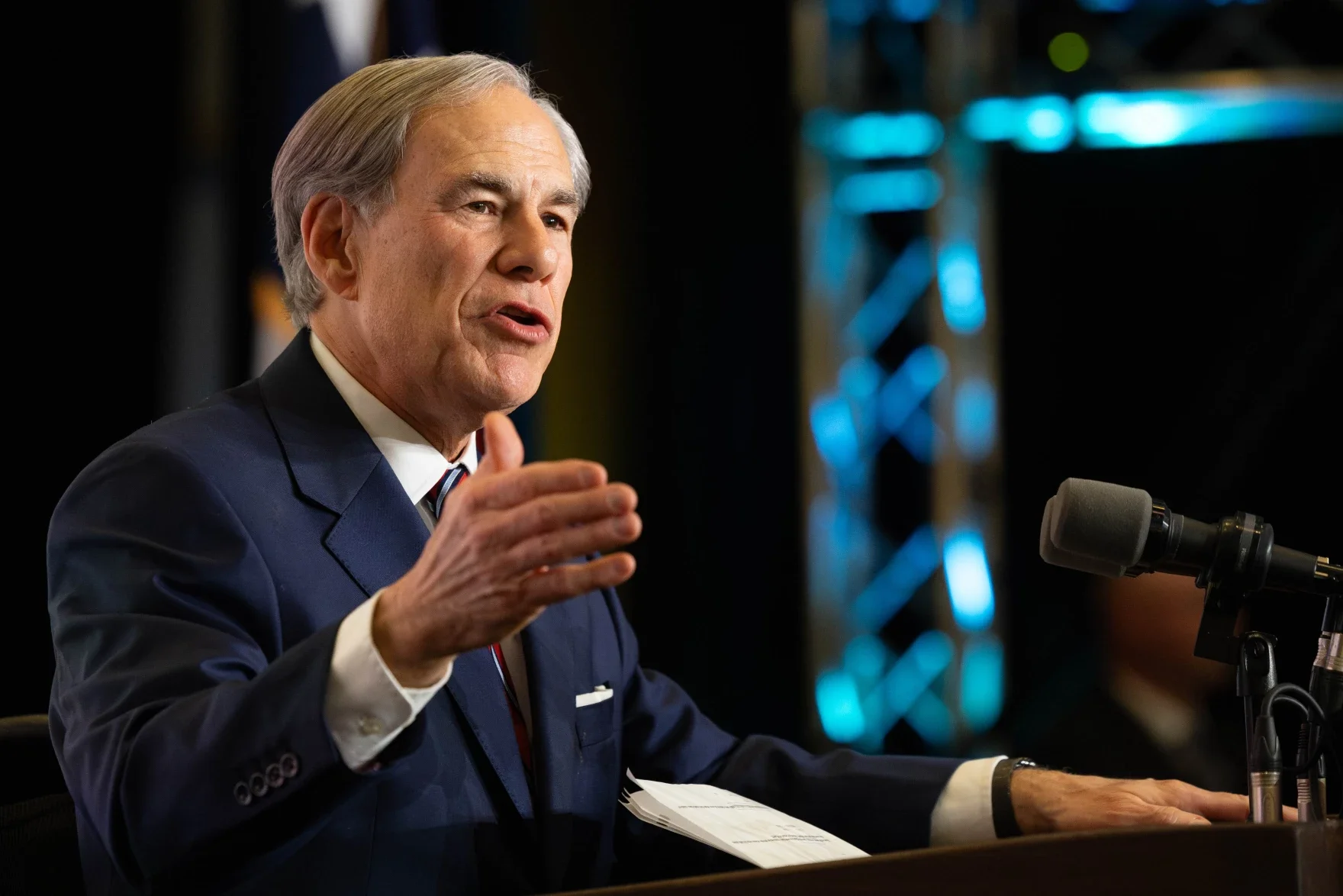
May 14, 2026 - Abbott targets Travis County district attorney in new criminal justice plans
KUT News - Toluwani Osibamowo
Texas Gov. Greg Abbott has unveiled a set of criminal justice policy proposals that directly target the authority and discretion of county district attorneys, particularly in urban counties like Travis County.
Among the proposals is a plan to create a new statewide prosecutor appointed by the governor and confirmed by the state Senate. This prosecutor would have authority to monitor local felony cases, intervene when indictment deadlines are missed, and take over prosecutions in cases where local district attorneys do not file charges within a set timeframe. Abbott argues this would prevent dangerous offenders from being released due to delays or missed deadlines in local offices.
The plan also includes a proposal to make district attorneys eligible for impeachment, which would create a new mechanism for removing locally elected prosecutors from office. Abbott and supporters framed these changes as necessary to address what they describe as failures by certain district attorneys to aggressively prosecute felony crimes and meet indictment timelines.
The proposals were announced alongside law enforcement advocates and former prosecutors and were specifically tied to criticism of Travis County District Attorney José Garza, whom Abbott and allies accused of mishandling cases and contributing to delayed indictments.
Supporters of the proposal argue it is needed to strengthen accountability and ensure consistent prosecution of serious crimes, while opponents argue it would significantly expand state control over locally elected prosecutors and reduce local discretion in criminal justice decisions.
-
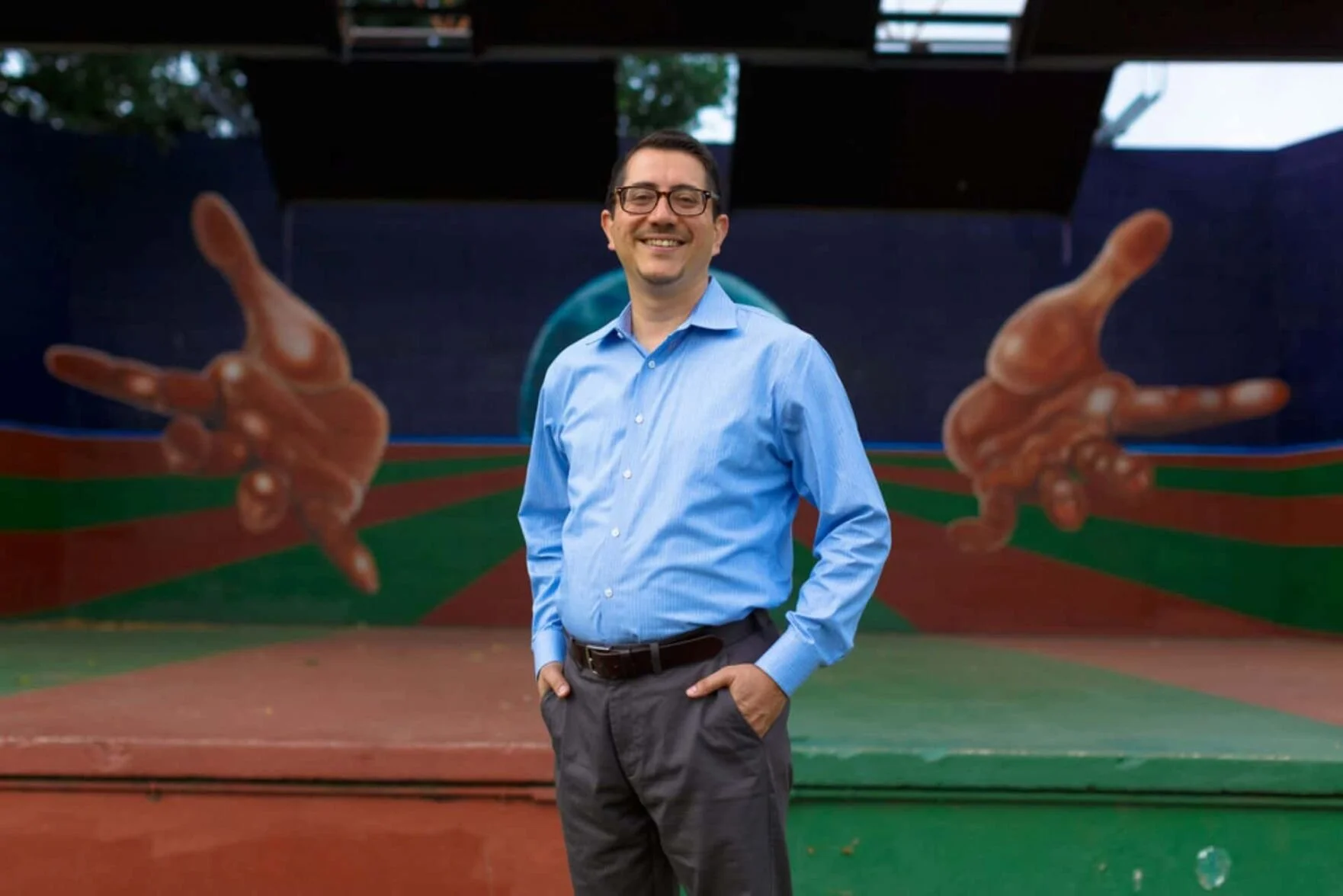
January 15, 2026 - Austin man has PIA lawsuit denied in favor of DA Garza who he investigated for withholding records and tampering of witness testimony
Chris Harris - X
Cases drawn out by the TCDA's office perpetuate corruption within DA's that lack oversight and accountability.
Chris Harris' appeal for public information was rebuffed and juggled around by Garza's office, after repeated requests and lawsuits.
Chris Harris became interested in the prosecution of the Daniel Perry case after observing the trial. Specifically, he says he learned of allegations that Detective David Fugitt may have engaged in witness tampering during the prosecution and wanted to understand what happened.
To investigate, Harris submitted a Texas Public Information Act request to the Travis County District Attorney's Office on November 1, 2024 requesting records related to Detective Fugitt.
According to Harris:
The DA's Office asked him for limited clarification (mostly spelling of a name and identifying information).
Harris responded, the office gave him a cost estimate.
He paid $222.75.
The office produced some records.
However, Harris believed they had not produced everything covered by his request.
Under Texas law, when a governmental body wants to withhold records, it generally must timely request a ruling from the Texas Office of the Attorney General — Harris argues the DA's Office missed multiple statutory deadlines.
The Attorney General agreed that the deadlines had not been met and ruled that the statutory "presumption of openness" applied. In other words, because the deadlines were missed, the requested records were presumed to be public unless there was a compelling reason to withhold them.
Rather than simply complying with the Attorney General's ruling, the Travis County DA's Office filed a lawsuit in district court challenging that ruling. Harris then intervened in the lawsuit to defend his rights under the Public Information Act.
The DA argued that Harris's wording was narrow. Specifically, they interpreted language like "information surrounding Detective David Fugitt” to mean only records where Detective Fugitt himself appeared, such as emails he sent or received.
Under that interpretation, if two prosecutors emailed each other discussing Detective Fugitt—but Fugitt wasn't copied—the DA considered those emails non-responsive and therefore didn't produce them.
Harris argued that the Public Information Act requires government agencies to interpret requests liberally, interpret them in good faith, ask clarifying questions if something is unclear, and favor disclosure rather than secrecy. Harris argues the DA did the opposite.
The district court ultimately sided with the DA. It granted the DA's Plea to the Jurisdiction and dismissed Harris's claims with prejudice.
Now Harris is asking the Third Court of Appeals to reverse that decision.
Situations and cases like these cannot be upheld where DA’s continually slip through the cracks with evasion and talking in circles.
Law and order starts with accountability.
-

December 31, 2025 - Texas appeals court says AG Ken Paxton can’t require counties to hand over case data
KXAN - Ayden Runnels, Kate McGee, The Texas Tribune
In 2025, the 15th Court of Appeals ruled that the Texas Attorney General's office "does not have the authority to compel district attorneys to share prosecutorial data with the state’s top lawyer".
This complicates prosecutorial integrity, oversight, transparency and accountability because an obstruction of data from prominent DA's limits the visibility of law enforcement arrests versus filed cases and convictions from the DAs.
Such a ruling makes it difficult for groups like DPST to adequately analyze DA policies and hold these officials accountable for pursuing law and order, not letting off criminals easy.
Reforms must focus on transparency, state dashboards, and open records regulation to promote accountability on DA's and state officials - restore public trust, restore law and order.
-

September 10, 2025 - New-found emails show left-wing group quietly writes policies for Soros-backed DAs: 'No billing, no publicity'
Signs of The Times - Emma Colton and Breanne Deppisch
Newly obtained emails show a criminal justice advocacy and consulting organization has been quietly assisting a network of progressive district attorneys by drafting policy language, providing prosecution guidelines, and offering strategic communications support.According to the report, the group supplied “model policies” and advisory materials covering areas such as bail practices, charging decisions, diversion programs, and approaches to prosecuting certain categories of crimes. The emails also suggest that this assistance was sometimes offered without billing and with minimal public visibility, allowing prosecutors’ offices to adopt the materials as their own internal policy.
The article argues that this reflects a coordinated effort to influence local prosecutorial policy across multiple jurisdictions through an informal national network of reform-minded district attorneys and affiliated organizations, rather than through directly elected officials or transparent public processes.
It further raises concerns that these outside groups may play a significant role in shaping criminal justice policy in major cities, even though they are not accountable to voters.
The organization involved, according to the article, disputes characterizations of improper influence and maintains that it provides standard policy support and technical assistance to elected prosecutors.
-

Outsourcing Justice: How donors and activists control progressive prosecutors and corrupt the criminal justice system from within
Law Enforcement Legal Defense Fund
The Law Enforcement Legal Defense Fund (LELDF) examines how outside advocacy and consulting organizations are shaping prosecutorial policy within a network of progressive district attorneys across the United States. The report argues that many recent criminal justice reforms are not developed solely inside elected prosecutors’ offices, but are significantly influenced through sustained relationships with external nonprofit policy groups.
Drawing on emails, public records requests, and internal communications, LELDF documents repeated interactions between the Wren Collective and multiple district attorneys’ offices. These communications include substantive involvement in policy development—such as drafting or revising prosecution guidelines, advising on diversion programs, influencing bail policies, and helping shape communications strategies used by prosecutors to explain policy changes to the public.
A central finding of the report is the level of integration between outside organizations and internal office operations. Rather than isolated advisory input, the relationships described appear ongoing and embedded in day-to-day policymaking. In several instances, outside actors are shown contributing directly to both the substance of prosecutorial policy and the messaging used to justify it.
LELDF also highlights concerns about transparency, noting that these relationships are not always clearly disclosed to the public even when they appear to have a meaningful role in shaping official policy decisions. This raises questions about how prosecutorial discretion is exercised and who is effectively influencing those decisions.
The report frames this as part of a broader structural shift in criminal justice governance, where informal networks of advocacy organizations play a significant role in shaping prosecutorial priorities. From this perspective, elected district attorneys retain formal authority, but policy development increasingly occurs through collaboration with external groups that are not directly accountable to voters
-
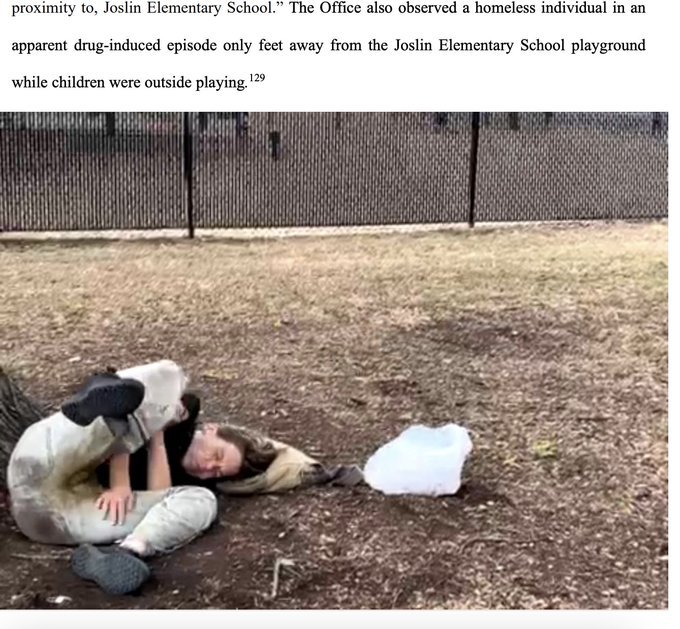
September 2, 2025 - Rising public funding and limited oversight of Austin homelessness programs have sparked concerns over transparency, accountability, and neighborhood safety impacts.
X - CTX News
A publicly funded homelessness service provider in Austin has come under scrutiny over how millions in city contracts are being used, how the organization is structured, and whether oversight mechanisms are sufficient given its scale and impact on surrounding neighborhoods.
The Sunrise Homeless Navigation Center, operated under Sunrise Community Church, has received increasing levels of city funding in recent years—growing from relatively modest amounts in 2021 to over $1.6 million in 2025, with total city funding exceeding $4.3 million since 2021. The organization operates multiple programs under city contracts, including navigation services and housing-related initiatives tied to both local and federal homelessness response funding.
Concerns have been raised about transparency and accountability due to the organization’s nonprofit-church structure, which is not required to file standard IRS Form 990 disclosures. Publicly available financial reporting and independent audits are not readily accessible, despite the scale of taxpayer funding involved. This has prompted questions about how funds are allocated, how performance is measured, and what oversight standards apply when services are delivered through faith-affiliated nonprofit structures.
The center’s operations have also become a point of community concern in South Austin, where nearby residents and public reports have cited recurring safety issues in the surrounding area. Incidents referenced in public reporting include drug-related hazards near adjacent schools and a reported violent altercation connected to the facility. A lawsuit filed by the Texas Attorney General seeks to shut down the center, alleging the organization has contributed to conditions affecting neighborhood safety and raising questions about compliance with expectations tied to its public funding.
At the same time, scrutiny has expanded to the organization’s leadership structure and financial footprint, including publicly listed property ownership records connected to senior figures within the organization. These details have intensified debate over whether governance and financial oversight align with the level of public investment being directed into the program.
More broadly, the situation reflects a growing policy tension in Austin’s approach to homelessness services: balancing large-scale public investment in nonprofit-run housing and navigation programs with demands for transparency, measurable outcomes, and neighborhood-level public safety. As city funding for these programs continues to rise, the central question has become whether current oversight structures are sufficient to ensure accountability for both financial management and community impact.
-

September 1, 2023 - Travis County DA Jose Garza’s Sweetheart Deal with Child Rapist Shows Anti-Law & Order Sentiment by Radical Prosecutors
Elena - Committee for Police Officer’s Defense
According to the Austin Police Association, in August of 2021 a 13-year-old female was lured online by an adult male predator, later identified as Ever “O’Niel” Diaz-Lopez, and ultimately gang raped by O’Niel and his two roommates, identified as Santos Celso-Flores and Christian Diaz-Lopez. O’Niel picked up the child under the guise of going to a nightclub, but instead took her to his apartment off East Riverside Dr. Once inside the apartment, the child victim was raped by O Niel, Santos, and Christian. After the brutal gang rape by these three men, O’Niel drove the child back to her house and left her in her driveway.
Christian Diaz-Lopez confessed to the brutal rape of the child and implicated Santos and O’Niel in the gang rape. O’Niel immediately fled the country and to this day has an outstanding warrant for Aggravated Sexual Assault of a Child (First Degree Felony).
On August 9th 2023, Santos Celso-Flores was charged with aggravated sexual assault of a child, 2 counts of indecency with child sexual contact, and failure to identify giving false or fictitious information.
The Travis Counity District Attorney’s Office, under the leadership of Jose Garza, allowed Santos out on a $40 bond while awaiting trial for the gang rape of the 13 year old. While Santos was out on bond, he allegedly molested a 13-year-old female and a 14-year-old female.
Christian Diaz-Lopez was given a sweetheart deal: a reduced charge from aggravated sexual assault of a child down to unlawful restraint. He only served two years and is set to be deported back to his own country by ICE.
The District Attorney’s Office has allowed these monsters to roam free and continue to do irreparable harm to more young girls when they should have been locked up for these heinous crimes. This is just one example of the havoc Garza and his office are wreaking with low bonds and sweetheart plea deals to the worst types of criminals.
DA Jose Garza and his office need to be held responsible for releasing dangerous criminals back onto the streets and allowing them to terrorize our communities. This radical district attorney needs to learn the meaning of law and order, and we are calling on all law-abiding Austin citizens to stand together and let Garza and his office know that his leftist agenda has gone too far! We deserve safe communities and criminals should be held accountable for their crimes.
-
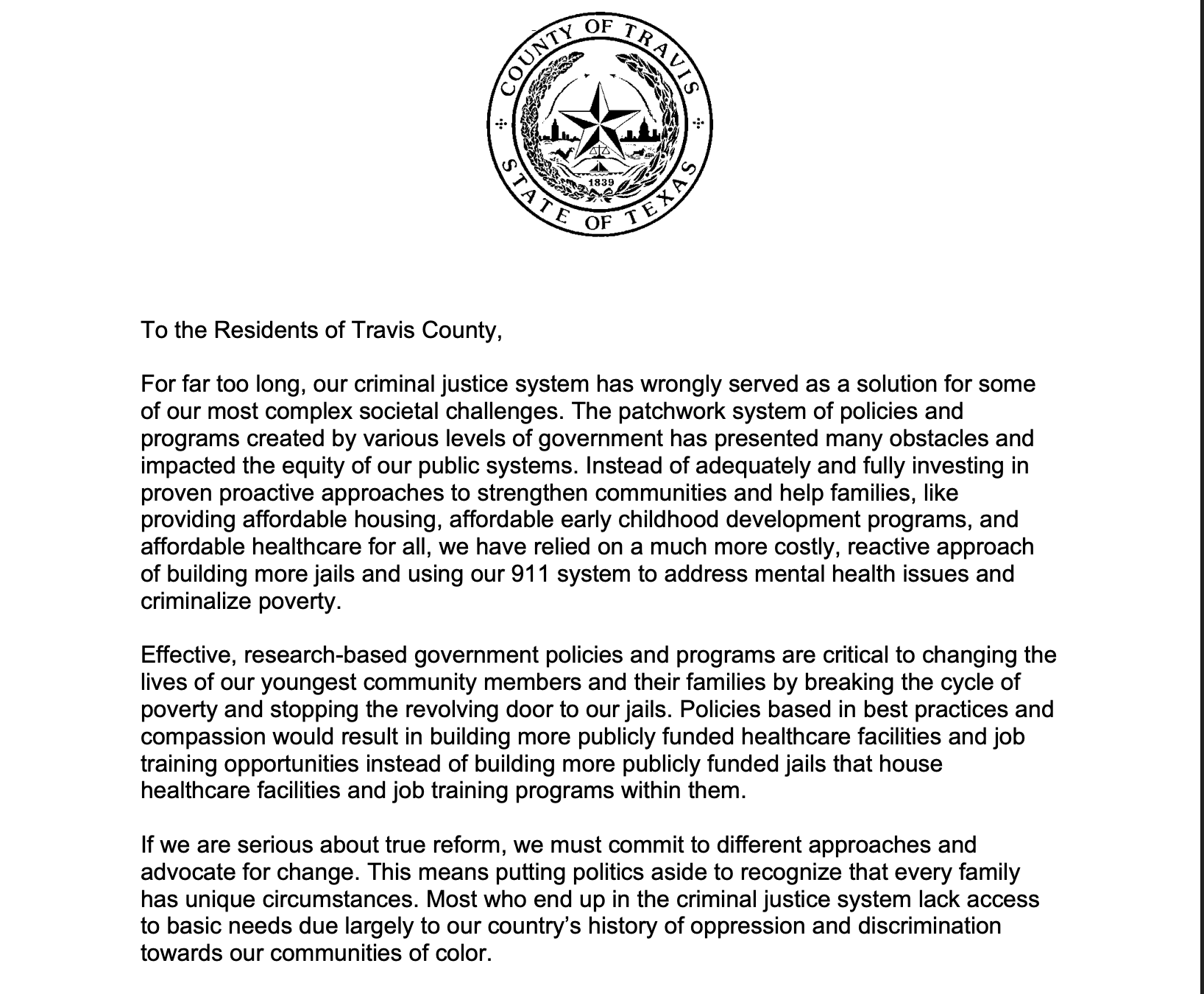
2021 - Garza Early Case Review another example of detrimental DA policies
In 2021, Delia Garza introduced early case review where prosecutors evaluate arrests shortly after they occur to determine whether charges should be filed, declined, or diverted, to prioritize court and jail resources and violent crimes.
Early case review can be valuable when used to identify weak cases, but it becomes problematic if it is used to decline charges before a full investigation is completed or to categorically deprioritize offenses that impact community safety.
For Travis County specifically, supporters of Delia Garza's policy argue that early case review prevents unnecessary incarceration and focuses resources on serious offenses. Critics have argued that some cases may be declined too quickly or that the office's charging priorities are too narrow.
Concerns include
Incomplete information. Early in a case, prosecutors may not yet have witness interviews, forensic evidence, surveillance footage, or follow-up investigation. A case that looks weak on day one may become much stronger a week later.
Pressure to move quickly. If prosecutors are expected to make charging decisions within hours of arrest, they may reject cases before law enforcement has finished building them.
Victim concerns. Victims may feel their case was never fully investigated if charges are declined before additional evidence is gathered.
Resource allocation philosophy. In some jurisdictions, critics argue that early review is used not just to weed out weak cases, but also to decline categories of offenses that prosecutors consider lower priority.
DPST stands for safe communities for justice. DAs cannot pick and choose the law to enforce and must be held accountable.